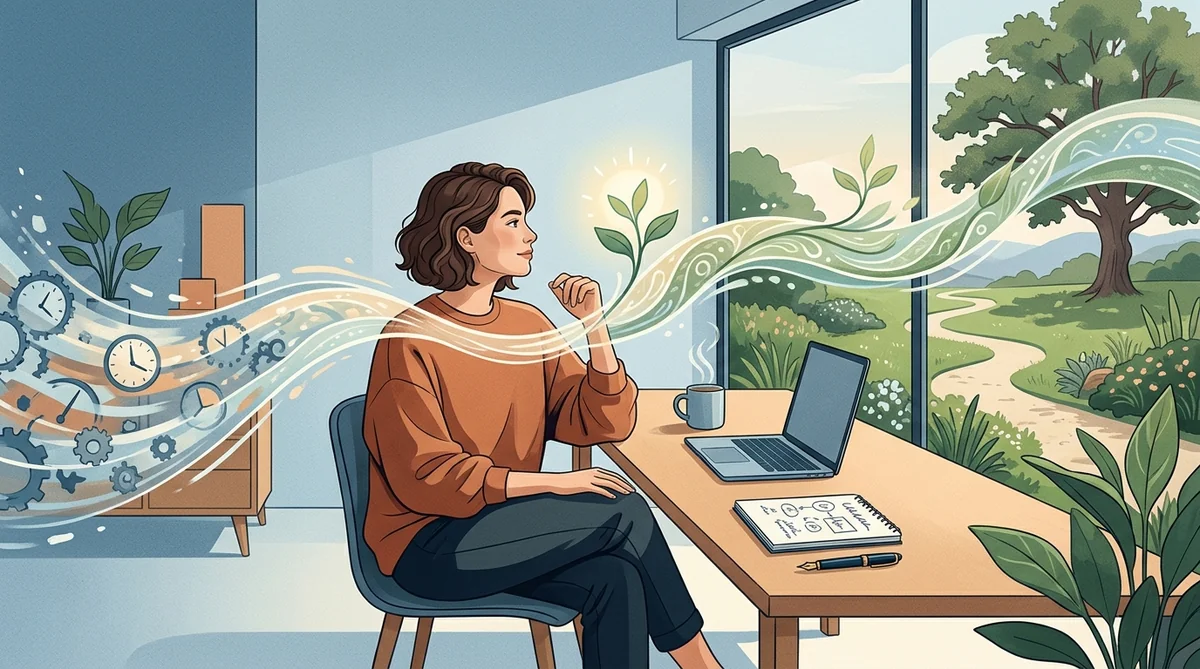
Science Reveals Why Waiting for Motivation Sabotages Your Year
Recent studies from Harvard, APA, and the University of Toronto explain why waiting for inspiration stalls your progress and how to jumpstart momentum with...

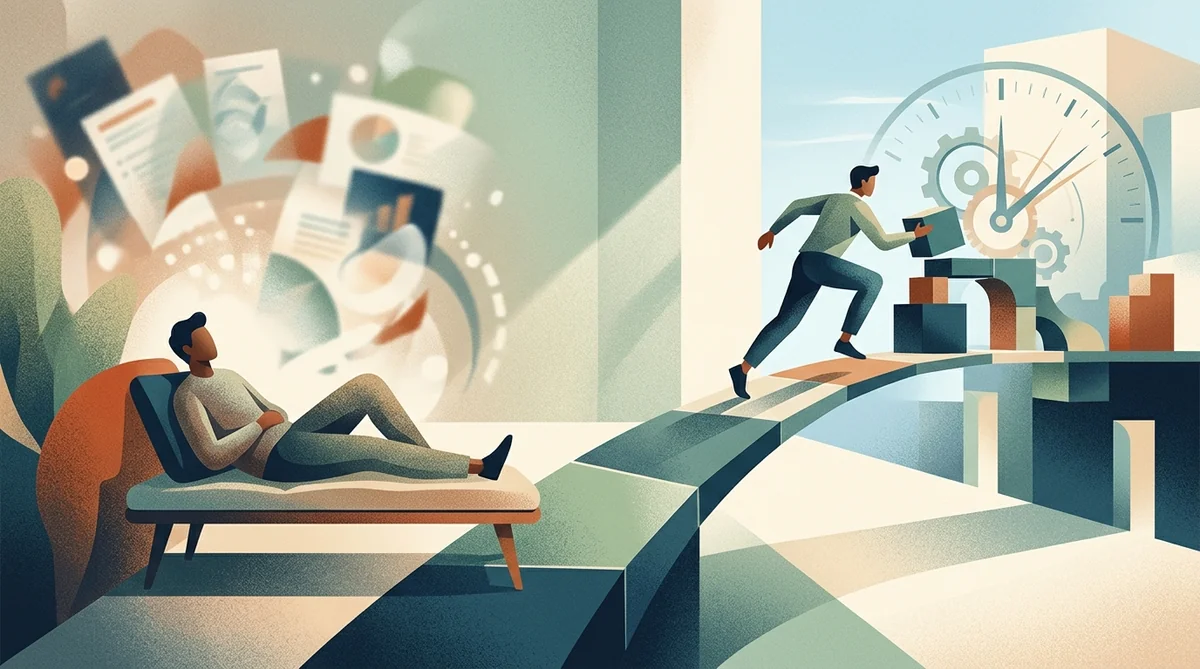
Table of Contents
- The Hidden Cost of Late Deliveries Caused by Waiting for Momentum
- The Bias That Punishes Late Deliveries
- Why Your Brain Confuses Fear with a Lack of Drive
- The Emotional Excuse Behind Procrastination
- How Small Wins Ignite Your Daily Dopamine
- The Progress Principle in Your Daily Routine
- Three Practical Steps to Start Without Being Inspired
- Break Down the Goal to Reduce Mental Friction
- Sources Consulted
Have you ever shut your laptop at the end of the day feeling utterly drained, yet haunted by the frustrating sense that you made zero progress on your most important project? It’s happened to me more times than I’d care to admit, especially when waiting for that magical spark of enthusiasm just to open a blank document.
For years, we’ve been sold the myth that action depends on prior inspiration. However, recent scientific evidence proves precisely the opposite. Waiting to feel motivated before you start isn’t a clever strategy—it’s the fastest route to sabotaging your goals for the year.
The Hidden Cost of Late Deliveries Caused by Waiting for Momentum
When you postpone a task waiting for the "ideal moment," you might think you're protecting the quality of your work. In practice, that delay works against you even before anyone reviews what you've done.

The Bias That Punishes Late Deliveries
A study from the University of Toronto and the Rotman School of Management found that delivery timing fundamentally alters how others perceive our performance. The research revealed that work submitted past the deadline is systematically rated as lower quality, even when the content is identical to an on-time submission.
That delay triggers a negative cognitive bias in bosses, clients, and colleagues alike. Evaluators naturally begin to question both the competence and professional integrity of the author. To put it bluntly: waiting for perfect inspiration ultimately destroys the real value of your hard work.
Why Your Brain Confuses Fear with a Lack of Drive
If you know that turning things in late hurts your reputation, why is it so agonizingly hard to begin? The answer doesn't lie in your planner or your sheer willpower. It lies in how your mind handles discomfort.

🎨 Editorial Visualization: AI-generated illustration for eloptimista.soy.
The Emotional Excuse Behind Procrastination
According to the theoretical framework of the American Psychological Association (APA), procrastination is essentially a dysfunctional emotional regulation strategy. We don't put off a project because we lack organization skills; we do it to dodge immediate negative emotions like anxiety, boredom, or the fear of messing up.
In fact, the belief that you need to feel motivated to start ranks among the top 15 cognitive rationalizations for delay. Furthermore, under Temporal Motivation Theory, the further away a reward feels, the lower your executive drive. If a goal looks massive and distant, your brain will eagerly seek quick relief in any available distraction.
How Small Wins Ignite Your Daily Dopamine
The good news is that you don’t need to wait for enthusiasm to come knocking. By analyzing how high-performing teams operate, science has shown that motivation actually works in reverse.
The Progress Principle in Your Daily Routine
A classic study published in the Harvard Business Review by Teresa Amabile and Steven Kramer analyzed over 12,000 daily work diary entries from 238 professionals across 26 creative projects. The results showed that 76% of days with the highest motivation were tied directly to concrete task progress, commonly known as small wins.
This finding confirms the Progress Principle: action generates the psychological momentum that we often mistake for spontaneous inspiration. A neurobiological review published in PMC backs this up, noting that dopamine circuits respond to feedback from real progress, rather than passive anticipation in front of a screen.
Three Practical Steps to Start Without Being Inspired
Understanding the theory helps, but what actually transforms your week is what you do the moment you sit down at your computer. As Ryan and Deci's self-determination theory points out, motivation isn't a fixed personality trait—it's a dynamic engine that turns values into concrete actions.

🎨 Editorial Visualization: AI-generated illustration for eloptimista.soy.
Break Down the Goal to Reduce Mental Friction
To move from paralysis to real momentum without relying on your mood, apply these three simple tweaks:
- Define a ten-minute micro-win: Shrink your pending task down to a step so tiny it doesn't trigger emotional resistance, such as drafting three lines or sketching an outline.
- Protect your deadlines with early blocks: Schedule short advance work sessions days ahead of the due date to sidestep the negative bias that penalizes late submissions.
- Track your visible progress: Jot down one concrete win you completed by the end of the day; that visual cue feeds your reward loop for the following morning.
It's not about cluttering your calendar with busywork or waiting for the "perfect Monday." Your micro-challenge for today is simple: pick that lingering task you've been dodging for days, set a ten-minute timer, and dive in without negotiating with yourself. You'll see how the motivation shows up right after you start.
Sources Consulted
- The Power of Small Wins — Harvard Business Review
- Procrastination and Mood Regulation Framework — American Psychological Association (APA)
- Missed deadlines lead people to judge work more harshly, study says — The Guardian
- The Behavioral Neuroscience of Motivation — PMC / NCBI
- The puzzle of motivation | Dan Pink — TED
Written by Félix Soler
Wellness & Psychology Editorial Team
Personaje editorial de El Optimista. Comparte pequeños hábitos diarios para superar el cansancio, organizarte mejor y vivir con calma.
Thematic editorial persona backed by our human curation team.