
Slowing Down: The Hidden Edge of Working Without Rush
Giving up the rush doesn't slow you down—it gives you an edge. Discover what neuroscience says about the slow pace and how to apply it today.


Table of Contents
- The Trap of Living with Time Sickness
- When the Rush Erases Our Four Thousand Weeks
- What Neuroscience Says About Doing Everything at Once
- The Hidden Cost of Cortisol in Your Daily Workday
- Why Unplugging Makes You More Competitive
- Breaking the Urgency Loop Without Derailing Your Career
- How to Train a Slower Pace in Your Weekly Schedule
- Three Simple Agreements to Regain Your Focus
- References
Have you ever shut down your screen at the end of the day feeling exhausted, yet with the nagging sense that you didn't actually move the needle on what matters? It happened to me for years. I used to confuse being busy with building something valuable.
We live in a culture that rewards immediate responses and packed calendars. Yet, when you look at how the most solid creators and professionals work, a different pattern emerges. Those who choose to slow down aren't left behind; on the contrary, they gain the clarity to pick their battles better.
The Trap of Living with Time Sickness
Constant rush has become so normal that we barely question it. In a brilliant column on the tyranny of the clock, writer Rosa Montero highlights a key concept coined by physician Larry Dossey back in 1982: time sickness.
It’s the obsessive belief that there is never enough time. We feel we must run faster just to stay in the game. As Carl Honoré warns in his defense of slowness, the problem starts when we view any pause as wasted time.

🎨 Editorial Visualization: AI-generated illustration for eloptimista.soy.
When the Rush Erases Our Four Thousand Weeks
This acceleration pushes us to chase impossible goals, like reaching inbox zero. Author Oliver Burkeman calculates in his book Four Thousand Weeks that if we live to be 80, we have barely 4,000 weeks.
According to a review published in The Guardian, trying to optimize every single minute only breeds joyless urgency. When we accept that we can't do it all, we regain the judgment to focus on what truly deserves our effort.
What Neuroscience Says About Doing Everything at Once
Many of us defend the rush, believing we're skilled at juggling five pending tasks at the same time. However, science dismantles that myth with clear data.
A review published in PubMed Central (NIH) analyzed functional neuroimaging studies on the human brain. The results show that we lack the executive mechanisms to process complex tasks in parallel. What we call multitasking is actually a rapid, forced toggling back and forth between tasks.

The Hidden Cost of Cortisol in Your Daily Workday
The same study reveals an uncomfortable truth for our professional self-esteem. Those who believe they are good at multitasking show a real-world performance close to zero in laboratory tests.
Every frenetic jump between emails, messages, and documents carries a concrete biological price tag. It spikes cortisol levels and depletes prefrontal glucose. As a result, our working memory, critical judgment, and creative capacity all plummet. Working without a break doesn't make you faster; it just makes your thinking more superficial.
Why Unplugging Makes You More Competitive
When we normalize urgency, we tend to bring work right to the dinner table. An analysis by Harvard Deusto cites figures from the Randstad Workmonitor study confirming this trend. A high percentage of professionals are simply unable to disconnect during their rest periods.
The article points out that respecting real breaks protects emotional stability and long-term physical health. Resting isn't a weekend luxury; it's basic maintenance for your primary working tool: your attention.

🎨 Editorial Visualization: AI-generated illustration for eloptimista.soy.
Breaking the Urgency Loop Without Derailing Your Career
Extreme burnout is rarely a sign of success; it's usually a symptom of a lack of direction. Management Society experts warn that sustainable professional growth cannot be built by sacrificing your daily energy.
Research from Harvard Business School led by Professor Joseph Fuller reinforces this idea. The study points out that high-pressure dynamics without clear guidance trap people in low-productivity loops. Shifting down a gear lets you see the big picture and make better career decisions.
How to Train a Slower Pace in Your Weekly Schedule
Adopting a more human rhythm doesn't require quitting your job or moving to the countryside. Burkeman suggests practicing JOMO—the joy of missing out. It’s about choosing a few priorities and calmly accepting that the rest will have to wait.
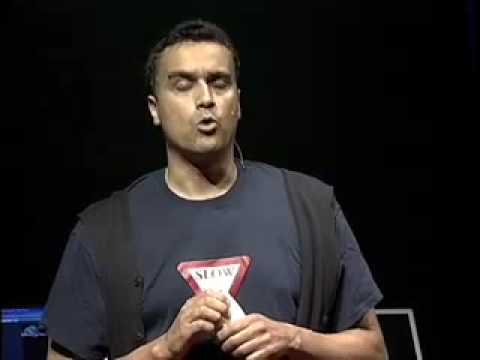
This philosophy pairs exceptionally well with the value of slowness championed by Carl Honoré and Cal Newport’s Slow Productivity approach. Both agree that doing fewer things, but with higher quality, produces superior results without burning out your enthusiasm.
Three Simple Agreements to Regain Your Focus
You don't need to overhaul your entire week overnight. Start with these three concrete adjustments tomorrow morning:
- Close notifications during deep work blocks: Silence chats and email for 45 minutes to finish a single important task.
- Limit your active projects: Choose a maximum of two or three main fronts per week; the rest can wait its turn.
- Defend your breaks without guilt: Step away from your desk when your workday ends and let your mind truly rest.
Your calendar doesn't need more hours; it needs less noise. Here is a micro-challenge for tomorrow: before opening your email, spend half an hour in silence working on your most relevant project. See for yourself how good it feels to move forward without rush.
Disclaimer and Liability Notice: This article does not replace the consultation, diagnosis, or treatment of a certified medical doctor or health professional.
References
- Sin tiempo — Rosa Montero, El País Semanal
- Four Thousand Weeks by Oliver Burkeman review — The Guardian
- Multicosts of Multitasking — PubMed Central (NIH)
- Desconexión Objetivo: rendir más y vivir mejor — Harvard Deusto
- ¿Deberías pensar en bajar el ritmo o cambiar de trabajo? — Management Society
- Why Low-Wage Workers Get Stuck—and What Companies Can Do — Harvard Business School
Written by Félix Soler
Wellness & Psychology Editorial Team
Personaje editorial de El Optimista. Comparte pequeños hábitos diarios para superar el cansancio, organizarte mejor y vivir con calma.
Thematic editorial persona backed by our human curation team.