
Asynchronous Work: The Playbook That Cut 70% of Meetings and Freed 322,000 Hours
Open your calendar on a Monday morning. Thirty-minute slots stacked from nine to five, video call links pasted into every corner, and that nagging realization t...

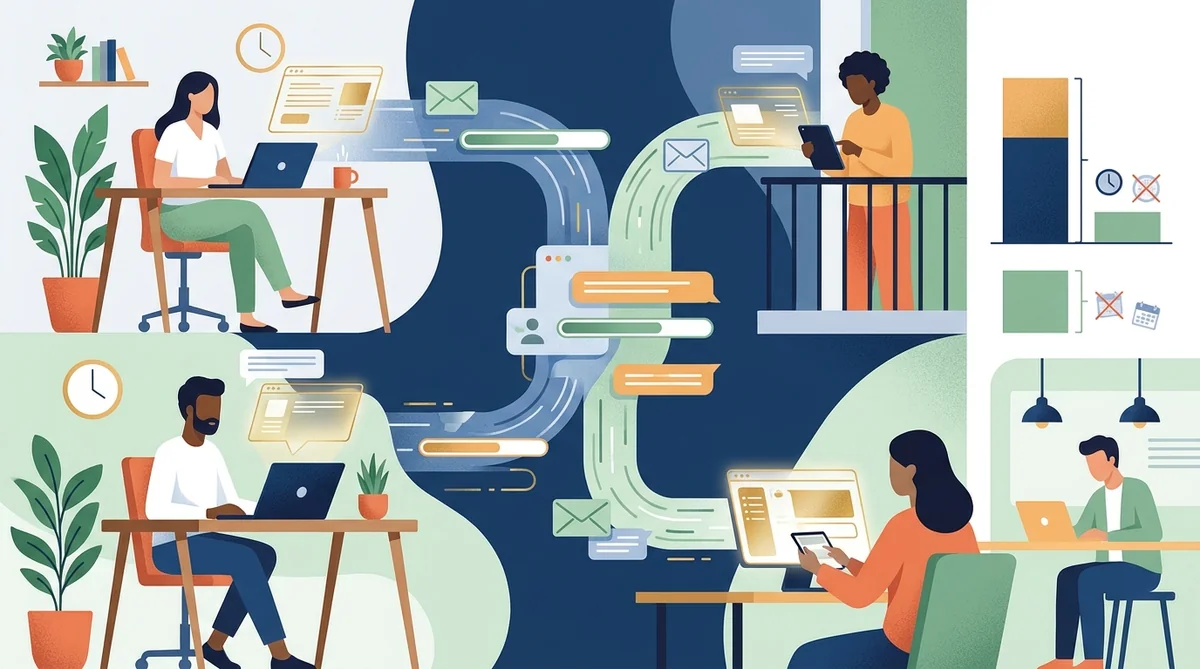
Table of Contents
Open your calendar on a Monday morning. Thirty-minute slots stacked from nine to five, video call links pasted into every corner, and that nagging realization that by the end of the day, you’ll barely have had five minutes of quiet time to build something tangible. It isn't a discipline issue. It’s a broken work culture that mistakes camera time for meaningful progress.
Too many organizations fell into the trap of believing that more calls equal better alignment. The real result is a fractured day. When your focus breaks every thirty minutes, deep work evaporates, and your most critical priorities get pushed to late nights and weekends.
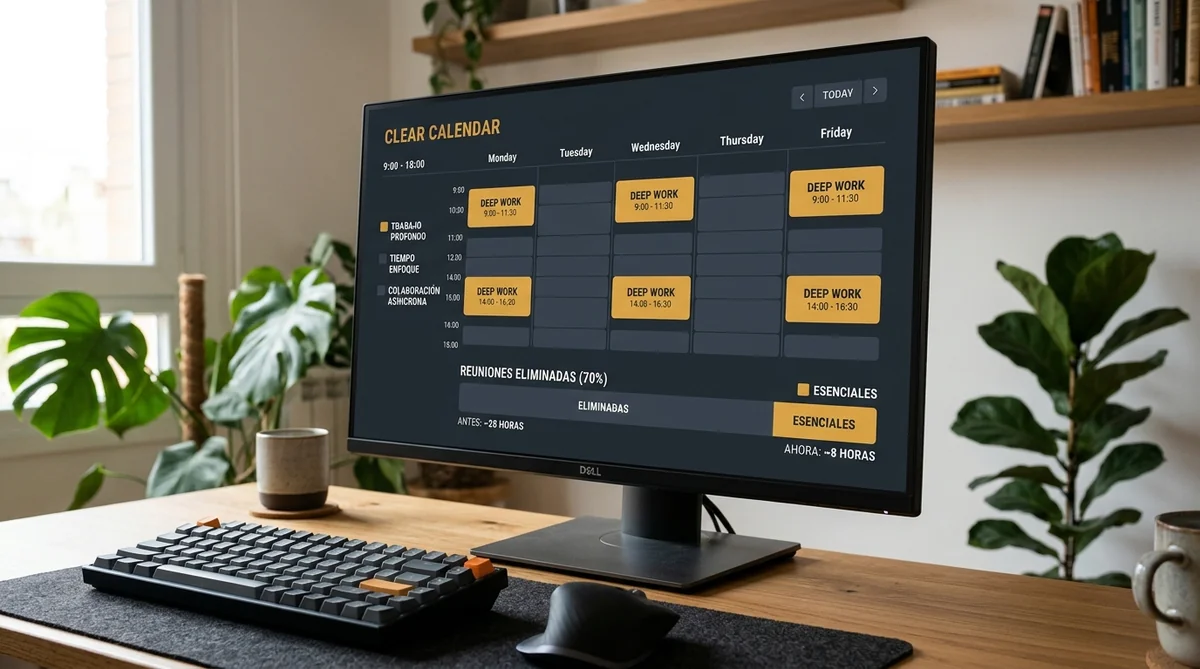
Faced with that dead end, one remote-first company chose to pump the brakes and run an honest, numbers-driven audit of its schedule. They systematically wiped out 70% of their recurring meetings and replaced them with asynchronous workflows. The outcome wasn’t chaos or isolation—it was faster turnaround, clear written decisions, and a team that got its focus back without burning out along the way.
Calendar Collapse: Video Calls vs. Deep Work
The real issue is rarely the quick ten-minute call to unblock a project. The true cost comes from relentless context switching—the mental tax of jumping from one Zoom room to another all day long. Getting back into the flow of a complex technical brief, a clean piece of code, or a strategic roadmap takes anywhere from fifteen to twenty minutes after every single interruption.
When your schedule looks like an overcrowded chessboard, your workday turns into an obstacle course. People end up sitting passively in meetings while quietly answering emails with their microphones muted. That illusion of activity drains mental energy while real needle-moving initiatives sit untouched.
Before overhauling its operating rhythm, the company pinpointed three key bottlenecks holding back their delivery:
- Focus block erosion: Specialists rarely had more than forty minutes of uninterrupted time to tackle tough technical challenges.
- Status calls masking micromanagement: Daily syncs were scheduled simply to share status reports, duplicating updates that were already logged in project management boards.
- The creeping workday: With mornings lost to sync calls, actual execution got pushed past regular working hours, fueling quiet burnout across the board.
The Meeting Audit: Putting a Real Price Tag on Every Call
To break such an ingrained habit, the leadership team brought financial clarity into the conversation. Taking a cue from tech leaders like Shopify, they calculated the direct dollar cost of every recurring slot on the calendar. Gathering five senior professionals for thirty minutes regularly costs anywhere from $700 to $1,600 in consumed productive payroll.
Kaz Nejatian, Chief Operating Officer at Shopify, framed this paradox with brutal clarity: "No one would submit a $500 expense report for dinner without approval, yet people regularly spend far more than that on meetings where nothing gets decided." If an operational expense of that scale requires strict sign-offs, professional time deserves equal discipline.
Rigorous academic research backs this up. An influential MIT Sloan Management Review study on the impact of meeting-free days, which evaluated 76 global companies, found that 70% of corporate meetings prevent professionals from doing their core work effectively. When calls swallow the week, coordination stops being an enabler and turns into the primary bottleneck.
The Async Playbook: Systems and Replacement Tools
Rather than forcing everyone to sit in the same digital room at the same time, the company rebuilt its operating model around a handbook-first philosophy—a system battle-tested at scale by GitLab. The core rule was clear: if an update doesn't require live, critical debate, it doesn't belong on a video call.
To make the shift painless, they rolled out a simple decision tree every team member reviews before sending a calendar invite:
flowchart TD
    A[New coordination need] --> B{Requires critical debate or urgent consensus?}
    B -- No --> C[Write proposal in Notion or record a short Loom]
    B -- Yes --> D{Can it be solved in 3 text exchanges?}
    D -- Yes --> E[Structured thematic Slack channel]
    D -- No --> F[15-min call with tight agenda & pre-read doc]
    C --> G[Async team review and final delivery]
    E --> G
    F --> G
This decision framework shifted the bulk of ongoing collaboration into structured documentation, freeing up hundreds of hours every month. The best asynchronous tools aren’t the ones packed with endless features—they are the ones that remove friction and return control of the calendar to the team.
| Tool | Best Async Use Case | What It Replaced | Weekly Time Reclaimed |
|---|---|---|---|
| Loom | Visual walk-throughs, design reviews, and product demos | 45-minute live screen-shares and presentations | 4 to 6 hours per person |
| Notion | Technical specs, central documentation, and decision logs | Brainstorming sessions and alignment meetings | 5 to 8 hours per person |
| Slack (Threaded channels) | Targeted questions, quick sign-offs, and blocker resolution | Daily morning stand-up video calls | 2 to 3 hours per person |
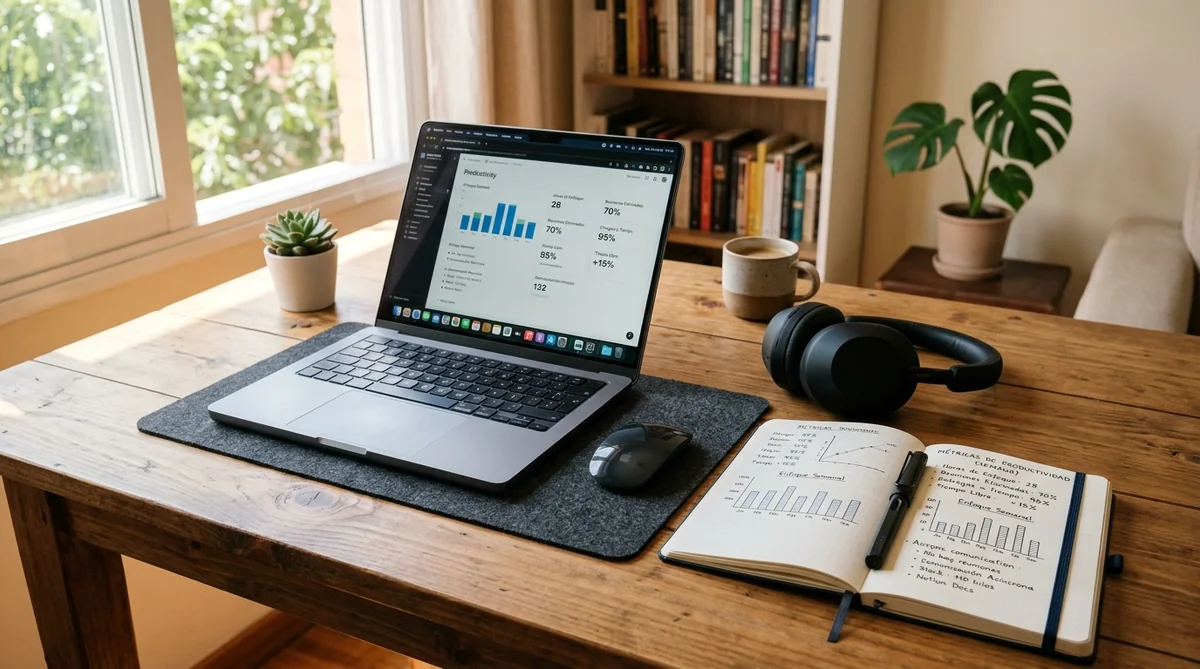
Working asynchronously also calls for a workspace set up for sustained focus. Pairing this system with active noise-canceling (ANC) headphones and a clean, decluttered desk helps you tune out home distractions and slip into deep work much faster.
What Happened After Cutting 322,000 Meeting Hours
The practical results of trading live video for clear written context were swift and measurable. The clearest large-scale precedent was highlighted in the Forbes report on Shopify’s massive calendar purge, which wiped more than 12,000 recurring calendar events across ten thousand employees in one stroke. That single move gave back roughly 322,000 collective hours over the course of the year.
The operational impact was immediate: on-time project deliveries climbed by an estimated 18% to 25%. Because specialists weren't interrupted every half hour, technical teams could ship complex features in a single focused sprint without needing to work late.
Meanwhile, the MIT Sloan research documented matching gains across organizations that trimmed their meeting load by 60% to 70%:
- Overall productivity: Jumped by 73% once uninterrupted work blocks were protected.
- Workplace stress: Fell by 57%, thanks to a sharp decline in video call fatigue.
- Cross-team collaboration: Rose by 55%, because key information was documented in transparent, searchable records instead of getting lost in verbal syncs.
- Job satisfaction: Climbed by 52%, building a more autonomous, engaged workplace.
💡 Consejo Pro
Leadership Takeaway: Excessive meetings are almost always a symptom of fuzzy processes. Instead of patching over ambiguity with another calendar invite, fix the core system: document workflows clearly, communicate in writing, and trust your team to execute.
The Three-Question Filter: How to Audit Your Schedule Today
You don’t need to rewrite an entire corporate culture overnight to reclaim your workday. The shift begins in your own corner of the company, whether you manage a team or handle client deliverables on your own.
Before you open your calendar to send an invitation, run the request through this three-part filter:
- 1. Async memo or video: Can this be solved in 3 paragraphs with a three-paragraph memo or a two-minute video? If the goal is purely to inform, share a milestone, or get a quick green light, write a crisp note in your project workspace or record a short Loom. Let your colleagues review it when it fits their flow.
- 2. Active role required: Does every attendee speak speaking role? If someone is there just to listen for takeaways, their live presence is an inefficient use of company resources. Send them the summary notes afterward and let them use that half hour on their own high-priority work.
- 3. Pre-read agenda: Is a clear written agenda shared and clear objective shared ahead of time? If there is no pre-read document shared at least twenty-four hours in advance, cancel the call. Forcing ideas into writing sharpens thinking and often solves the core challenge before anyone even turns on a webcam.
Routines that supercharge your productivity don’t feel heroic or exhausting; they feel quiet, natural, and fluid. Protecting your daily focus blocks is the kindest thing you can do for your craft and your peace of mind. Give yourself a week with fewer video calls and more room to think—your energy and your output will show the difference.
Trademark Disclaimer: All trademarks, logos, and brand names cited (including Zoom, Shopify, GitLab, Loom, Notion, Slack) are the property of their respective owners. Their mention in this publication is strictly for educational and instructional purposes under nominative fair use principles, with no affiliation, endorsement, or sponsorship by the trademark holders.
Sources
- MIT Sloan Management Review: The Surprising Impact of Meeting-Free Days — Empirical research examining the impact of meeting-free days across 76 global companies and their direct effect on productivity and stress reduction.
- Forbes: This Company Is Canceling All Meetings With More Than Two Employees — Coverage of Shopify's calendar reset policy and a financial breakdown of the true cost of corporate meetings.
- Stanford Report on Workplace Productivity — Reference documentation and empirical data (news.stanford.edu).
- Harvard Business Review Research & Insights — Reference documentation and empirical data (hbr.org).
- National Bureau of Economic Research (NBER) — Reference documentation and empirical data (www.nber.org).
Written by Félix Soler
Wellness & Psychology Editorial Team
Personaje editorial de El Optimista. Comparte pequeños hábitos diarios para superar el cansancio, organizarte mejor y vivir con calma.
Thematic editorial persona backed by our human curation team.

Forget the Clock: The Real Blueprint for Managing Energy at Work
Task Management and Deep Work with the Hybrid Formula