Dopamine Detox Without Extremes: Reclaim Your Daily Focus
You wrap up a demanding email, your head feels foggy, and on pure autopilot you grab your phone for a 3-minute break on social media.

Table of Contents
- Why Phone Breaks Drain Your Focus Instead of Recharging It
- The Myth of "Emptying" Brain Dopamine
- Hard Fascination vs. Soft Fascination During Work Hours
- What Happens in Your Mind During Breaks Under 10 Minutes
- How to Build Screen-Free Breaks Without Feeling Punished
- Extreme Viral Detox vs. Dopamine Fasting 2.0: What Works at Work
- Comparing Approaches for Everyday Office Workweeks
- Why Punitive Rules Backfire by Day Three
- Myths vs. Reality Around Quick Rewards and Deep Focus
- Extreme Isolation Claims vs. Practical Evidence
- Warning Signs Your Break Is Stealing Energy
- Step-by-Step 1-Week Method to Reset Your Breaks
- Step 1: Audit Your Top Three Attention Leaks
- Step 2: Add Gentle Friction at Your Workspace
- Step 3: Swap Endless Feeds for Movement or Visual Rest
- Tools That Protect Focus Without Overspending
- Distraction Blockers and Native Focus Modes
- How to Pick Based on Your Daily Work Type
- Workplace Trends: Keeping Focus Alive in Hybrid and Remote Teams
- Dealing With Constant Chat Availability
- Closing Rituals to Unplug Cleanly at Day's End
- Your Action Plan to Start Today Without Rigid Rules
- Frequently Asked Questions
- How soon do people notice better afternoon focus with this method?
- Does listening to music during a micro-break count as hard or soft fascination?
- What if my role requires checking email or chat frequently?
- Sources
You wrap up a demanding email, your head feels foggy, and on pure autopilot you grab your phone for a 3-minute break on social media. When you return to your laptop, your brain feels twice as heavy.
The cursor blinks on a blank document and not a single line comes out. It isn't a lack of discipline or chronic laziness: you just swapped a demanding task for a flood of high-intensity stimuli that blocks your attention from recharging.
You don't need to lock yourself in a dark room to get your mental clarity back. You only need to see what happens during those micro-breaks and build a realistic dopamine detox tailored for people working on screens Monday through Friday.
TL;DR (Quick Summary):
- Extreme sensory-isolation fasts aren't practical for real workweeks; lasting focus comes from Dopamine Fasting 2.0, which trims compulsive triggers without self-punishment.
- Your brain doesn't "run out" of dopamine: what wears down is your capacity to sustain directed attention through constant task switching.
- Swapping screen breaks for soft fascination pauses under 10 minutes cuts accumulated fatigue and boosts afternoon work energy.
Why Phone Breaks Drain Your Focus Instead of Recharging It
When midday exhaustion hits, your instinct looks for instant relief. The catch is that we mix up stopping work with resting the mind.
Scrolling short videos or answering chat threads keeps your brain actively processing data. Even when you sit in complete silence, your alert system stays on overtime.

The Myth of "Emptying" Brain Dopamine
Social media popularized the myth that dopamine is a toxin we have to "flush" from the body. Biology works differently: dopamine is an essential neurotransmitter for movement, motivation, and learning.
What actually happens after hours of rapid digital triggers is dulled sensitivity to everyday tasks. Examining Dr. Cameron Sepah's original Dopamine Fasting 2.0 protocol makes the goal clear: you aren't removing joy from your day, you're curbing specific compulsive habits.
Think of resetting your palate to enjoy fresh fruit after days of sugary soda and candy. Fruit tastes plain at first, yet within days you recover the sensitivity to enjoy natural flavors without artificial spikes.
Hard Fascination vs. Soft Fascination During Work Hours
Not all breaks ask the same effort from your brain. To restore concentration cleanly, it helps to separate two very different ways your gaze gets pulled between tasks:
- Hard fascination: happens during video games, endless video reels, or infinite scrolling on your phone. It locks down attention aggressively, spikes information load, and keeps burning executive reserves while you think you're resting.
- Soft fascination: occurs when you watch leaves move outside a window, listen to rain against the glass, or brew a cup of tea. Your mind notices surroundings without analyzing streams of data or making micro-decisions.
Shifting into soft fascination is like putting a car engine in neutral. The engine stays warm, yet it stops burning fuel while standing still.
Ignoring this difference builds up what cognitive science calls directed attention fatigue. That's the steady wear on the mental circuit that lets you focus on one goal and tune out background noise.
Imagine holding a notebook at arm's length straight ahead of you. For the first 5 minutes it feels effortless, yet after 2 hours in the same position your arm trembles and forces you to set it down.

What Happens in Your Mind During Breaks Under 10 Minutes
According to a meta-analysis published in PLOS ONE on the efficacy of micro-breaks—reviewing 22 independent samples with 2,335 participants—pauses under 10 minutes deliver measurable gains.
They noticeably cut accumulated fatigue (d = 0.35) and lift subjective energy (d = 0.36). Still, success doesn't come from merely pausing the clock; it depends on what you do in those minutes.
Low-cognitive-demand breaks outperform any pause spent reading feeds or checking messages. Skipping your phone also shields your afternoon from the task-switching penalty, because jumping between a report and notifications forces your brain to spend minutes rebuilding context afterward.
It works just like slamming the brakes on a freight train halfway down the track. When you decide to roll again, the locomotive needs miles just to reach cruising speed.
How to Build Screen-Free Breaks Without Feeling Punished
Professor Cal Newport captures this trap cleanly when writing about the danger of pseudo-depth in daily knowledge work. Mixing social feeds into breaks fractures attention residue and weakens your grasp on complex problems.
His practical alternative is simple boring breaks: tiny pockets with no instant digital reward. Far from punishment, they give working memory room to organize the ideas you just processed.
💡 Consejo Pro
Clean-desk break rule: If you want real recovery without feeling deprived, put your phone face down out of sight for 5 minutes. Look out the window, stretch your shoulders, or walk for water before touching any screen.
Extreme Viral Detox vs. Dopamine Fasting 2.0: What Works at Work
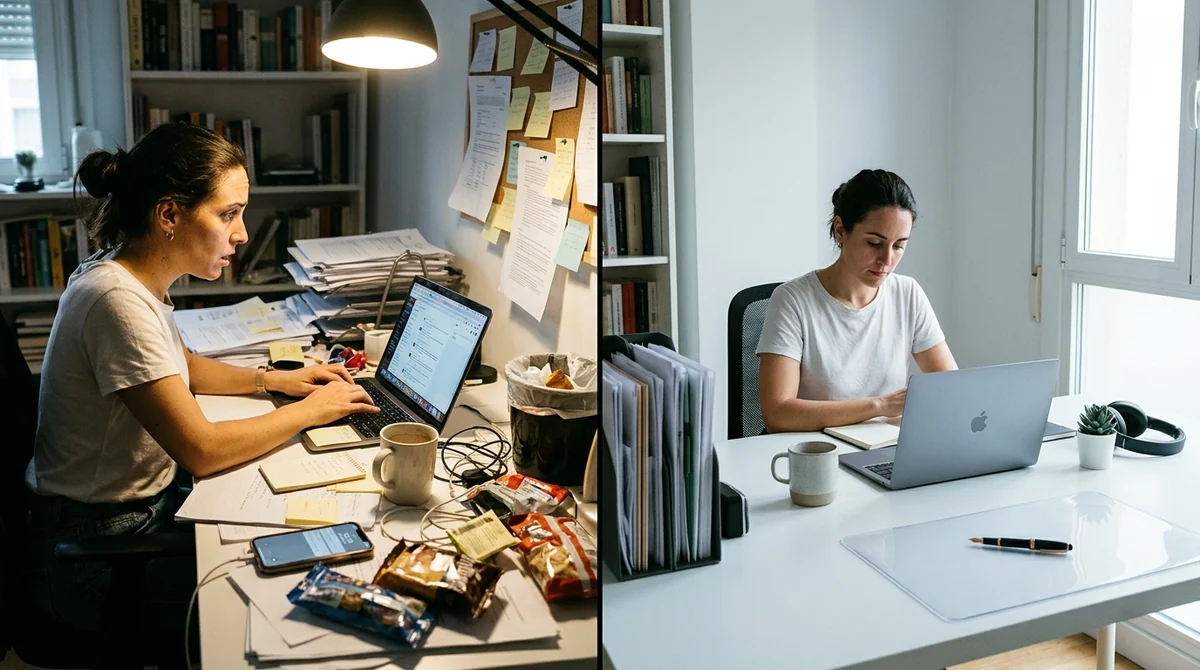
Most skepticism around digital detoxes comes from extreme viral trends. A punitive Silicon Valley craze a few years back promoted total sensory isolation.
Followers turned off lights, avoided eye contact, banned music, and stared at blank walls all weekend. For anyone juggling deadlines, family obligations, and real work deliverables, that approach simply isn't usable.
Comparing Approaches for Everyday Office Workweeks
Compare that extreme viral fad against Dopamine Fasting 2.0 adapted to a normal 5-day workweek:
| Practical Dimension | Extreme Viral Detox (1st Wave) | Dopamine Fasting 2.0 (Practical Framework) |
|---|---|---|
| Core goal | Cut out every enjoyable stimulus | Curb specific compulsive loops |
| Suggested window | Entire isolated days | Short focused windows during work |
| Screen policy | Rigid blanket ban | Selective friction during peak hours |
| Work compatibility | Very low (disrupts duties) | High (fits normal schedules) |
| Weekly sustainability | Collapses after weekend one | Sustainable medium term |
The deeper difference comes down to flexibility. While extreme rules try to police every waking minute, the 2.0 model targets only the triggers hijacking your schedule.
Why Punitive Rules Backfire by Day Three
Any system built on total deprivation creates a predictable rebound. Banning music, casual chats, or coffee for an entire day drains willpower before lunch.
By day three, pent-up frustration pushes you straight back into endless feeds twice as hard. Instead of feeling restored, you end up blaming yourself for lacking "self-control."
Routines that lift real output never feel military or heroic. They feel light, natural, and matched to your actual week.
Myths vs. Reality Around Quick Rewards and Deep Focus
flowchart LR
    A[Quick stimulus: infinite scroll] --> B[Brief spikes + mental fatigue]
    C[Slow reward: reading / short walk] --> D[Steady focus]
Before changing your desk habits, clear away pop advice that just creates noise. Plenty of attention hacks sound sharp in a 30-second clip yet fall apart in practice.
Extreme Isolation Claims vs. Practical Evidence
Studies and reporting covered by The Guardian on short work breaks reinforce that the human brain isn't built to sprint linearly for hours on end.
- Myth: Working 3 hours straight gets your task list done faster.
- Reality: Past the 90-minute mark without pauses, pace drops and detail errors climb, forcing extra rework later.
- Myth: Scrolling memes or news clips for 5 minutes "clears your head" between calls.
- Reality: Your visual cortex keeps decoding text, faces, and emotional triggers, so your spreadsheet feels even heavier afterward.
- Myth: You must delete all social accounts permanently to focus deeply.
- Reality: Moving those apps into scheduled evening windows keeps them out of your morning deep-work blocks.
Warning Signs Your Break Is Stealing Energy
How can you tell if your breaks actually recharge you? Watch these straightforward signals right when you sit back down:
- Restorative pause: You return to your desk with calm breathing, remember where you left off immediately, and notice relaxed eyes.
- Restorative pause: Your next concrete step feels clear without mental resistance toward the monitor.
- Energy-draining pause: You return with a tight jaw, forget what you were drafting 10 minutes ago, and look for another quick distraction.
- Energy-draining pause: The break feels like "nothing happened," even after spending 15 minutes staring at your phone.
Step-by-Step 1-Week Method to Reset Your Breaks
You don't need a 5:00 AM overhaul tomorrow morning. This gradual 7-day plan starts with one simple premise: work with what's on your desk today.
Step 1: Audit Your Top Three Attention Leaks
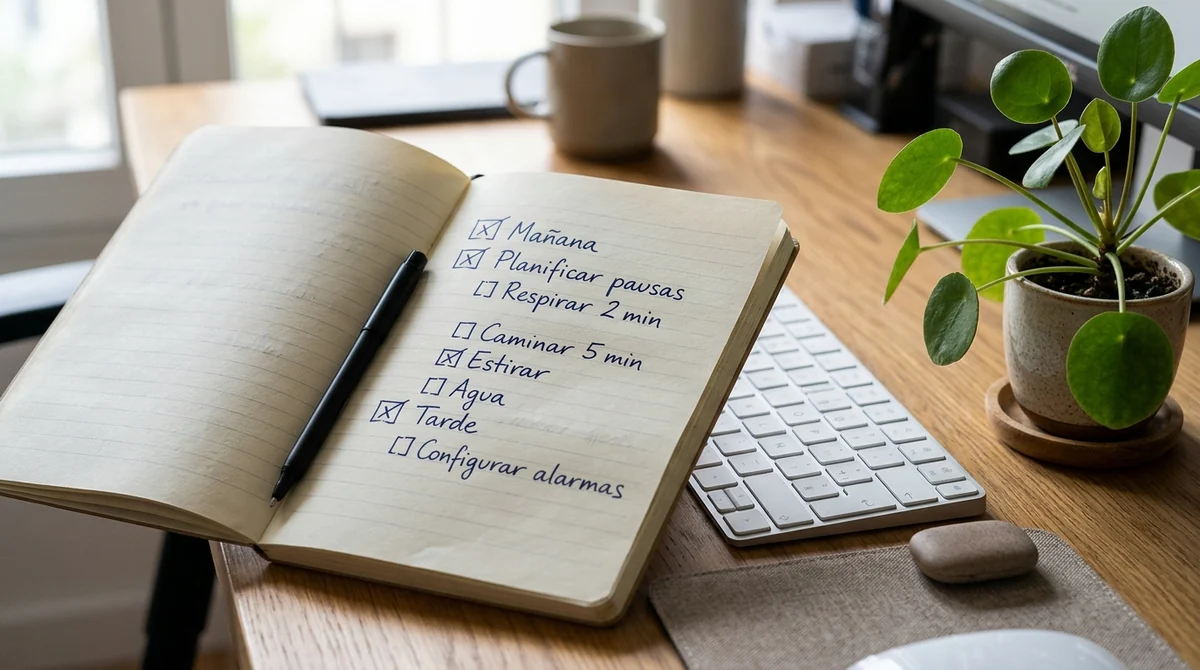
For the first 2 days, don't try to force any changes. Simply jot down on scrap paper what you reach for the second boredom or fatigue shows up.
You'll notice the same three triggers repeat: opening a news tab automatically, checking chat without urgency, or picking up your phone while a file loads. Naming your go-to leak solves half the battle.
Step 2: Add Gentle Friction at Your Workspace
On days three and four, place a small physical speed bump between you and distractions. You're not banning access; you're removing effortless autopilot.
Log out of social feeds in your work browser, mute non-urgent desktop alerts, and keep your phone in a drawer or across the room. Getting up deliberately to check it breaks the reflex loop on the spot.
Step 3: Swap Endless Feeds for Movement or Visual Rest
From days five to seven, fill those spare minutes with light movement or natural visual rest. Give your body a physical gear-shift signal without pouring new information into working memory.
- Days 1–2: Log the exact 3 times you default to digital distraction during work hours.
- Days 3–4: Turn off non-essential alerts and store your phone out of sight for 50-minute work blocks.
- Days 5–6: Pick 2 soft-fascination breaks (shoulder stretch, window view, or brewing tea/water).
- Day 7: Compare your 5:00 PM energy against last week and fine-tune block length.
Tools That Protect Focus Without Overspending
Willpower runs thin quickly after lunch. Well-configured focus tools hold your boundaries steady so you aren't fighting yourself every 20 minutes.
Choose pragmatically, though—you don't need paid subscriptions just to clean up daily work breaks.
Distraction Blockers and Native Focus Modes
Most workflows fit neatly into three tiers depending on how much friction your environment needs:
| Investment Tier | Solution Type | Main Advantage (✅) | Limitation to Consider (❌) |
|---|---|---|---|
| $ (Free / Built-In) | Native focus modes (iOS, Android, macOS, Windows) | Zero cost, ready in minutes | Easy to override with one impulsive click |
| $$ (Balanced) | Site-blocking browser extensions & timers | Hide addictive feeds during set hours | Requires self-restraint not to disable plugins |
| $$$ (Strict Cross-Device) | Multi-device synced strict blockers | Locks distracting sites on desktop and phone together | Too rigid if your role monitors live social channels |
💡 Consejo Pro
Smart buying rule: Always start at the free tier ($) by turning on your OS Focus Mode for the first two work hours daily. Only move up to $ or $$ if you catch yourself bypassing native blocks multiple times a week.
How to Pick Based on Your Daily Work Type
Ask what your job requires before installing extra software. Designers, engineers, and writers benefit directly from strict cross-device blockers ($$) that seal off morning focus windows.
Avoid aggressive browser-locking blockers if you work in customer support, operations, or community management. A work-only browser profile without personal logins ($) paired with a simple desk timer gives you cleaner results without breaking your duties.
Workplace Trends: Keeping Focus Alive in Hybrid and Remote Teams
Protecting attention would be easy inside an off-grid cabin. Modern hybrid and remote teams often reward instant replies, even when constant availability destroys deep output.
Stanford research on remote work patterns shows poorly coordinated messaging channels multiply micro-interruptions across the day. Always-on availability quietly blurs constant motion with meaningful progress.

Dealing With Constant Chat Availability
On Slack or Microsoft Teams, many employees feel unspoken pressure to keep their green status dot glowing nonstop. That pressure pushes people to check messages every 4 minutes, triggering the exact drain social feeds cause.
The realistic fix isn't vanishing silently—it's announcing visible focus windows. Setting a status like "Writing deep draft until 11:30—replying at noon" trains teammates cleanly without friction.
- With visible focus blocks: You finish demanding deliverables twice as fast and clear batched messages thoughtfully in 15 minutes.
- With instant always-on replies: You stay reactive to other people's urgency, leave core work half-finished, and finish drained.
Closing Rituals to Unplug Cleanly at Day's End
A workday dopamine detox finishes when you shut down on time. Closing your laptop while checking work mail on the couch stops your brain from realizing the workday actually ended.
Build a 3-minute shutdown ritual: write tomorrow's top three priorities on paper, close browser tabs, and close the lid deliberately. That small cue keeps unfinished tasks from hijacking your evening.
Your Action Plan to Start Today Without Rigid Rules
You don't need Monday morning or a brand-new planner to feel clear-headed again. Focus isn't just the absence of notifications—it's protecting quiet space around work that matters.
Pick one 50-minute block today. Set your phone across the room, work on one priority task, and reward yourself afterward with 5 minutes of soft fascination away from screens.
Once you feel how cleanly your energy bounces back after one real break, you'll realize you never lacked willpower. You only needed breaks that actually rest your mind.
Frequently Asked Questions
How soon do people notice better afternoon focus with this method?
Most workers notice lighter afternoon mental fatigue within the first 3 to 5 days of replacing screen breaks with visual rest. You aren't waiting months—you're cutting task-switching overhead immediately.
Does listening to music during a micro-break count as hard or soft fascination?
It depends on the audio. Quiet instrumental music while looking out a window keeps cognitive load low and works smoothly as a restorative break. Dense podcasts or spoken news force active language decoding, which prevents full mental recovery.
What if my role requires checking email or chat frequently?
Switch to short batch checks instead of keeping inboxes open all day. Run 25-to-30-minute focus sprints, clear messages for 5 minutes right afterward, and still take a brief screen-free rest before the next sprint.
Sources
- PLOS ONE: 'Give me a break!' A systematic review and meta-analysis on the efficacy of micro-breaks
- Cal Newport: Deep Habits — The Danger of Pseudo-Depth
- The Guardian: Short breaks can help boost energy at work, study suggests
- Cleveland Clinic: Dopamine Detoxes Don't Work — Here's What To Do Instead
- PMC: The impact of hedonic social media use during microbreaks on employee resources recovery
Written by Félix Soler
Wellness & Psychology Editorial Team
Personaje editorial de El Optimista. Comparte pequeños hábitos diarios para superar el cansancio, organizarte mejor y vivir con calma.
Thematic editorial persona backed by our human curation team.