Microshifting: How Splitting Your Day Unlocks Real Focus (and Retires the 9-to-5)
For years, we obsessed over *where* we worked: physical headquarters or the kitchen counter? Yet the real workplace revolution didn’t happen between four walls—...

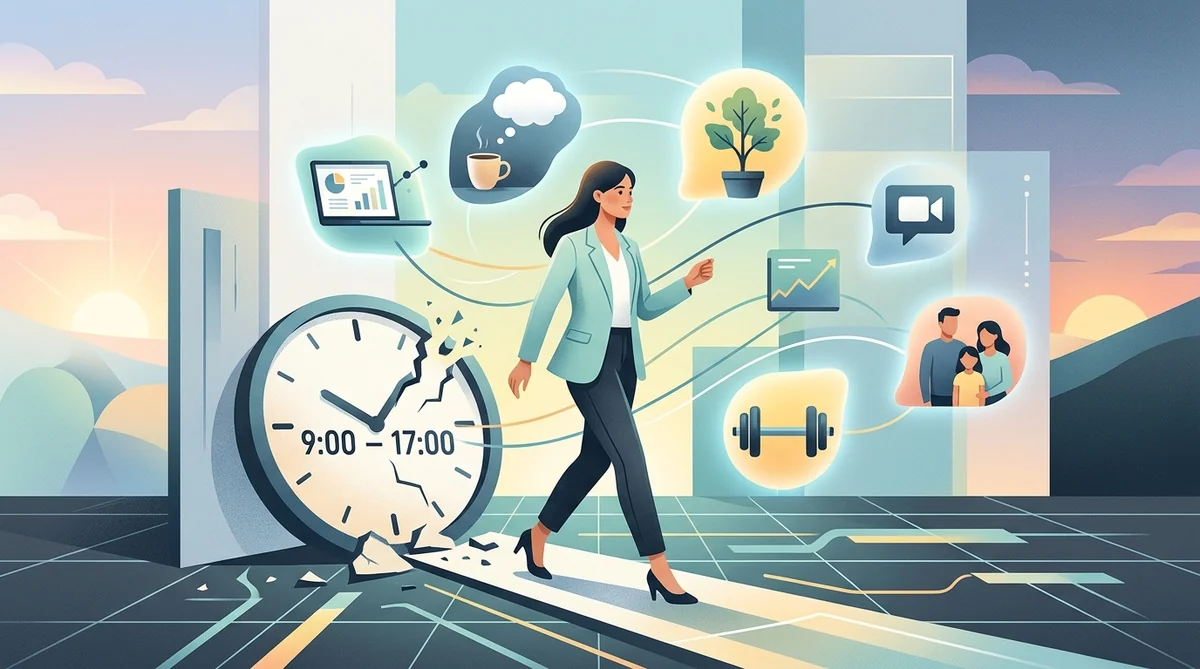
Table of Contents
For years, we obsessed over where we worked: physical headquarters or the kitchen counter? Yet the real workplace revolution didn’t happen between four walls—it happened across the face of the clock. The continuous, linear eight-hour shift—a direct holdover from 19th-century steam-powered factories—has quietly lost its mandate to a far sharper strategy: microshifting.
Trying to force unbroken concentration from 9:00 AM to 5:00 PM runs directly against human biology. Daily energy is never linear. One person hits peak cognitive clarity at dawn, while another finds their creative stride as the sun goes down. Even so, legacy corporate culture spent decades rewarding warm bodies in seats instead of measuring finished outcomes.
Breaking the day into intentional, high-use focus blocks—paired with planned pauses to deal with actual life—is no longer a quirk reserved for freelancers. It is the clearest answer to digital presenteeism. It’s not about filling your calendar with secondary tasks to look busy. It’s about finishing what actually moves the needle and taking ownership of your hours.
Breaking the Factory Mold: Why Linear Workdays No Longer Cut It
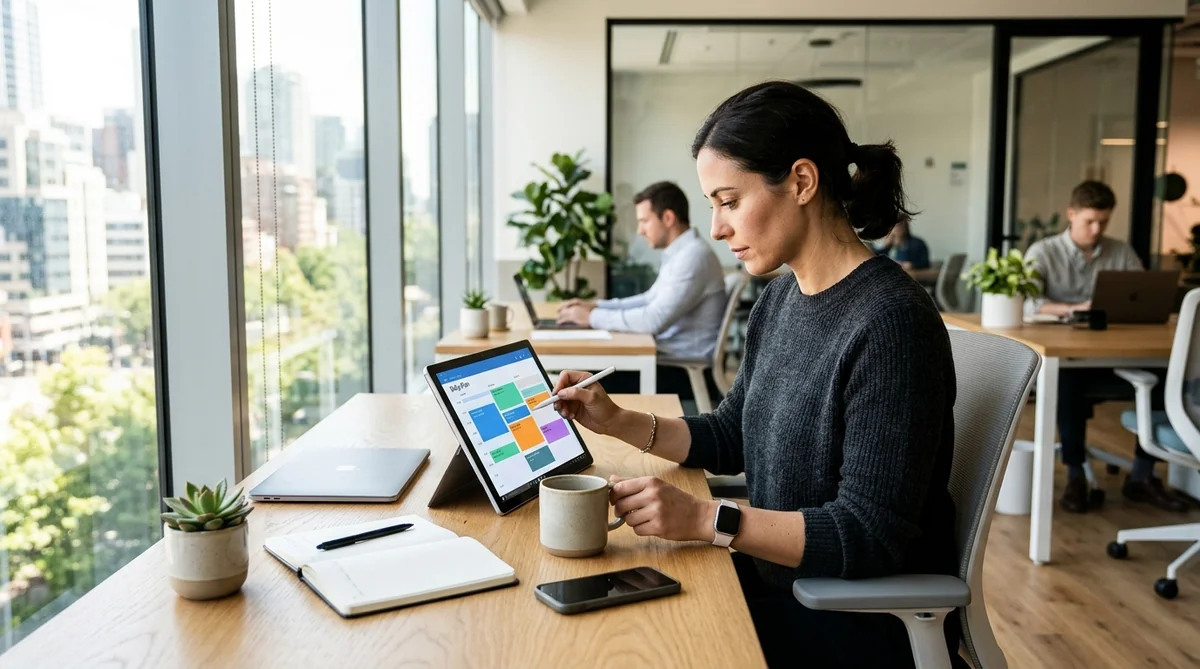
The punch clock was invented to monitor assembly lines where workers had to mirror mechanical rhythms. Forcing that same logic onto knowledge work—where analytical depth, critical judgment, and creative problem-solving drive actual value—created unsustainable friction. Staring blankly at a screen for eight uninterrupted hours doesn't guarantee sharp decisions; more often than not, it just breeds quiet exhaustion.
The data shows that this transition toward modular scheduling is already well underway. According to global workplace research from Monster on microshifting patterns, more than 53% of active professionals already break their workday into separate shifts rather than grinding through one continuous block.
What's more, 94% of workers using this rhythm do so on a weekly basis, discovering that deliberate recovery breaks provide the stamina needed for sustained, high-caliber performance.
The fundamental distinction is simple: as highlighted by Forbes in its workplace analysis, the old playbook rewards passive endurance, while microshifting rewards tangible deliverables built during deep focus sprints. This isn't about working fewer hours or shirking commitments. It’s about scheduling your most taxing tasks when your brain processes complexity at its sharpest.

Circadian Peaks vs. Forced Office Hours
The breakdown of the static workday didn’t happen overnight. The rise of hybrid workflows exposed an obvious truth: demanding that an entire team deliver peak analytical output between 2:00 PM and 4:00 PM completely ignores circadian biology. Every body moves to its own rhythm.
Cognitive performance data reveals why the one-size-fits-all office schedule fails the majority:
- High-impact early risers: Around 45% of professionals reach their mental peak during early morning hours, often wrapping up critical priorities before noon.
- The standard-block minority: Only 19% of workers report doing their sharpest work during the traditional midday corporate window.
- Afternoon and evening powerhouses: Another 17% find their highest clarity in the late afternoon or evening, when quiet communication channels make deep work effortless.
- Variable energy profiles: The remaining 19% experience fluctuating curves shaped by project complexity and household logistics.
This biological reality is central to The Guardian’s deep dive on the one-hour work pattern, which highlighted how dividing the day into intentional sprints allows people to coordinate professional craft with workouts, family care, and personal routines without sacrificing quality.

Expert Perspectives: Output Over Presenteeism
Organizational analysts and workplace researchers agree: making this shift requires unlearning visual surveillance. When an organization fixates on checking whether a green status dot is active on Slack or Teams, it suffocates the autonomy and critical thinking of its team.
Professor Kevin Rockmann, an organizational management specialist at George Mason University, shared in reporting for AP News the cultural shift this requires:
"The real challenge of microshifting for organizations is not calendar logistics. It’s letting go of the illusion of physical oversight and learning to evaluate talent strictly on tangible deliverables and the quality of the final output."
Team sentiment overwhelmingly backs this perspective. In Owl Labs' global State of Hybrid Work study, 65% of office workers cited schedule autonomy as a top priority, a figure that jumps to 73% among millennial professionals. Time ownership has become so decisive that respondents reported a willingness to forfeit up to 9% of their annual salary in exchange for arrangements that let them sculpt their own daily focus blocks.
How to Run Flexible Blocks Without Triggering Operational Chaos
Adopting microshifting without causing friction requires explicit expectations and clean communication protocols. If team members work in isolated pockets without shared visibility, delivery workflows quickly hit bottlenecks.
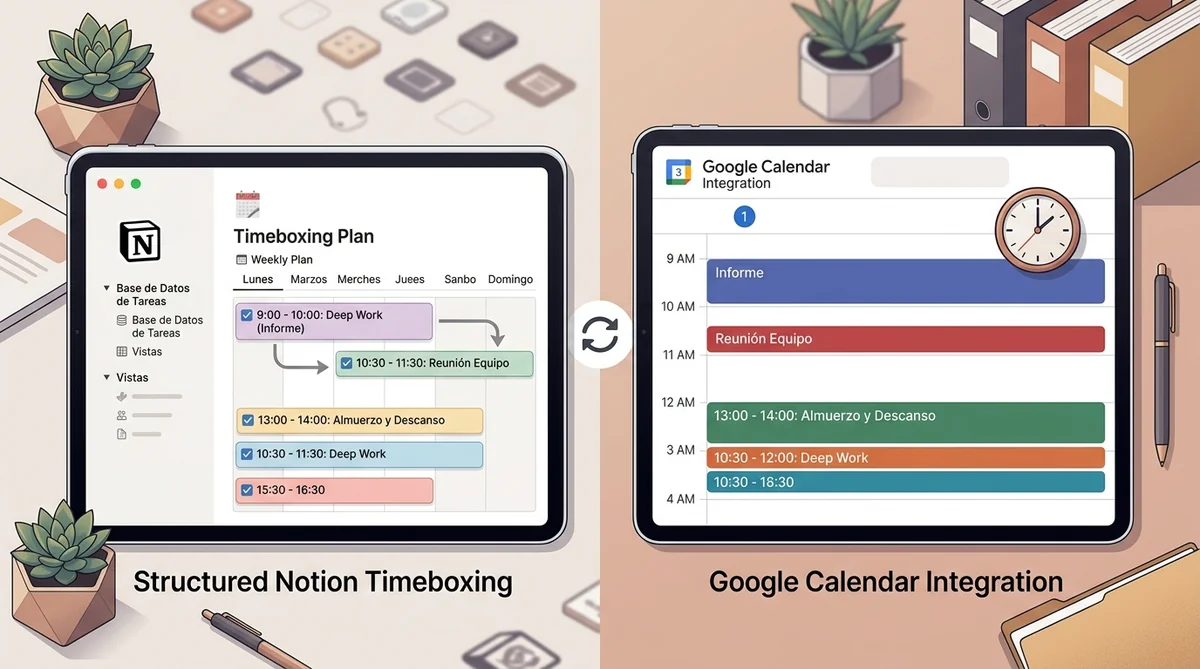
The bedrock here is asynchronous project management. Using tools like Notion, Sunsama, or Todoist ensures that projects carry written context, transparent deadlines, and clear ownership. On an individual level, physical desktop timers make it simple to defend 45- to 90-minute blocks by muting notifications and creating space for genuine flow.
📌 Importante
Successful microshifting is not about stretching work into late-night email marathons. The entire premise rests on async-first collaboration: document updates thoroughly, protect your peers' offline blocks, and gauge weekly progress by completed goals, never by hours logged in front of a screen.
Trademark Disclaimer: All trademarks, logos, and brand names cited (including Owl Labs, Notion, Sunsama, Todoist, Slack, Microsoft Teams) are the property of their respective owners. Their mention in this publication is strictly for educational and instructional purposes under nominative fair use principles, with no affiliation, endorsement, or sponsorship by the trademark holders.
Sources
- Owl Labs: 2025 State of Hybrid Work Report — Global research on schedule autonomy, flexible workplace policies, and modern microshifting dynamics.
- The Guardian: The one-hour work pattern and flexible life — Journalistic coverage on modular work schedules and personal life harmony.
- Monster: Research on Microshifting and Modern Workday Habits — Industry report tracking shift fragmentation and peak energy alignment among knowledge workers.
- Stanford Report on Workplace Productivity — Reference documentation and empirical data (news.stanford.edu).
- Harvard Business Review Research & Insights — Reference documentation and empirical data (hbr.org).
Written by Félix Soler
Wellness & Psychology Editorial Team
Personaje editorial de El Optimista. Comparte pequeños hábitos diarios para superar el cansancio, organizarte mejor y vivir con calma.
Thematic editorial persona backed by our human curation team.